How to Predict and Photograph Fog
Tips-tricks Intermediate
Why Fog Is a Photographer's Secret Weapon Fog transforms ordinary scenes into something extraordinary. A familiar park, a row of trees, a simple path...
9 min read
Published May 25, 2026
Why Fog Is a Photographer's Secret Weapon
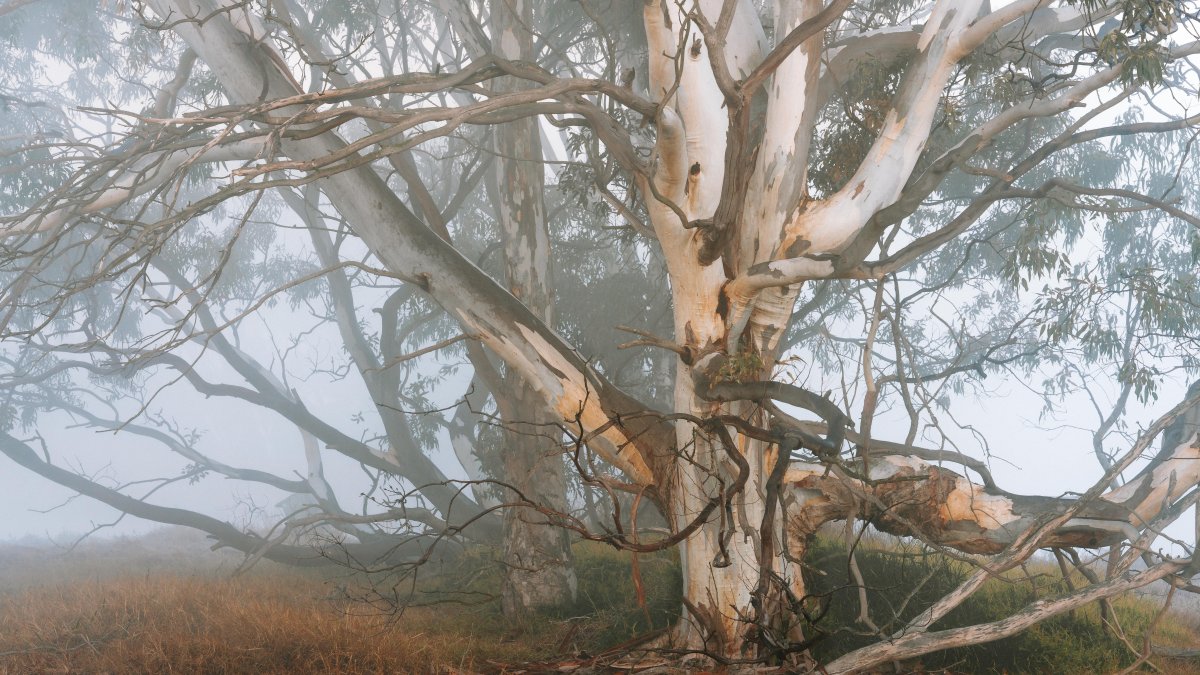
Fog transforms ordinary scenes into something extraordinary. A familiar park, a row of trees, a simple path - all of it becomes ethereal when wrapped in mist. Fog simplifies compositions by removing visual clutter, adds depth through atmospheric layering, and creates mood that's impossible to replicate in post-processing.
The challenge? Fog is fleeting and hard to predict. It can form in minutes and burn off just as fast. Most photographers miss it because they rely on luck rather than planning.
This guide covers the science behind fog formation, how to read weather conditions like a fog hunter, camera settings and composition techniques, and how ShutterTime's fog scoring helps you be in the right place at the right time.
The Science of Fog - What Creates It
Understanding how fog forms is the foundation of predicting it. There are three types that matter most to photographers:
Radiation Fog
This is the classic morning valley fog. On clear, calm nights, the ground radiates heat and cools the air directly above it. When that air reaches its dew point, moisture condenses into tiny suspended droplets - fog. You'll find radiation fog in valleys, near rivers and lakes, and in low-lying areas where cool air pools overnight.
Key ingredients: Clear skies overnight (allows maximum radiative cooling), calm winds (under 5 km/h), high relative humidity, and a dew point spread of less than 2°C.
Advection Fog
Warm, moist air moves over a cooler surface - common along coastlines where warm ocean air meets cold land, or when a warm front passes over snow-covered ground. Advection fog can persist for days and is less tied to the daily cycle than radiation fog.
Upslope (Orographic) Fog
When moist air is pushed up a hillside or mountain, it cools as it rises. If it cools enough to reach the dew point, fog forms along the slopes. This is what creates the classic misty mountain scenes in alpine forests and ranges.
When and Where to Find Fog
Fog isn't random. It follows patterns tied to season, terrain, and time of day.
Best Seasons
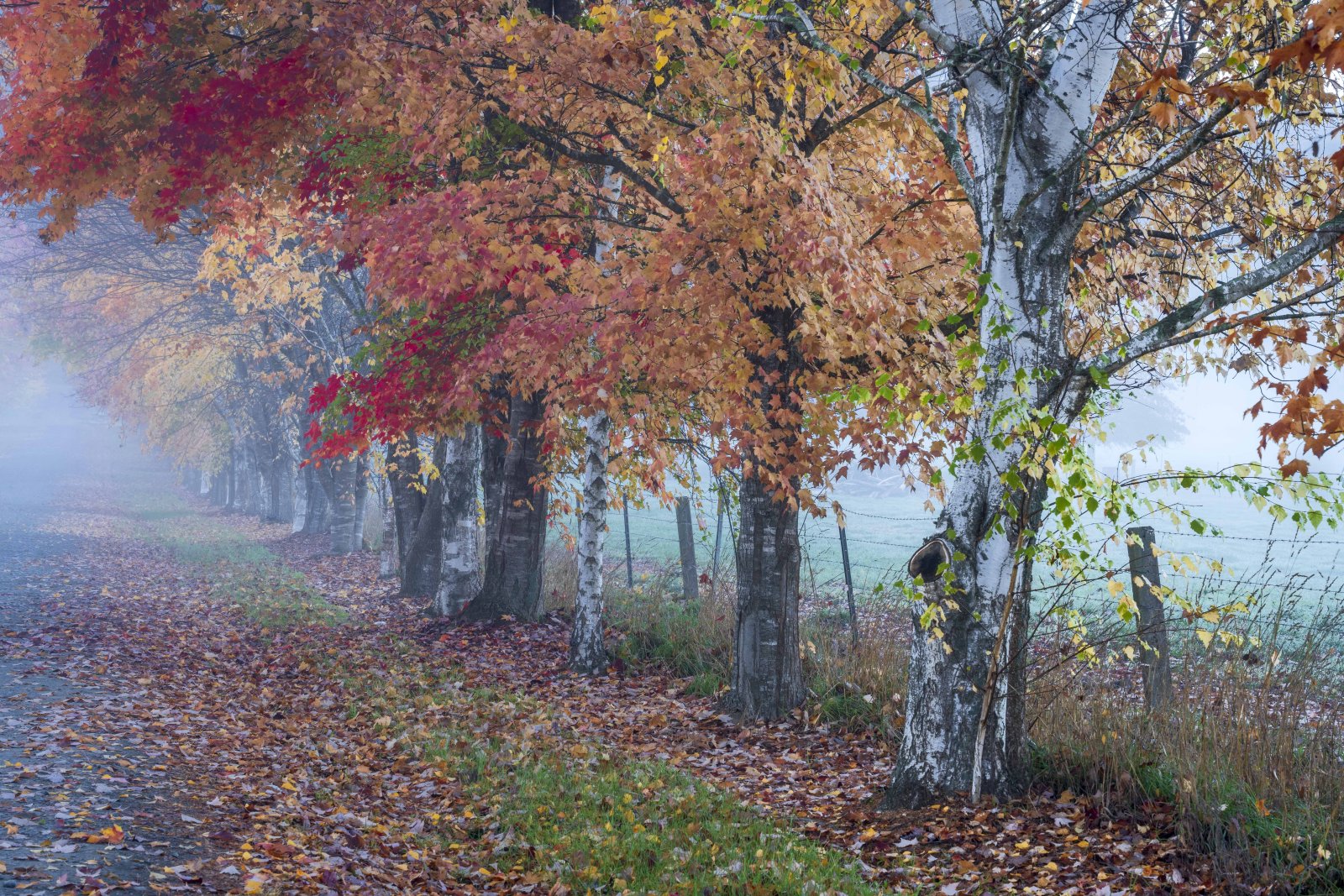
Autumn is the prime fog season for most locations. Warm days followed by cool nights create the ideal temperature differential. The soil and water bodies still hold warmth from summer, providing moisture, while nighttime temperatures drop enough to trigger condensation.
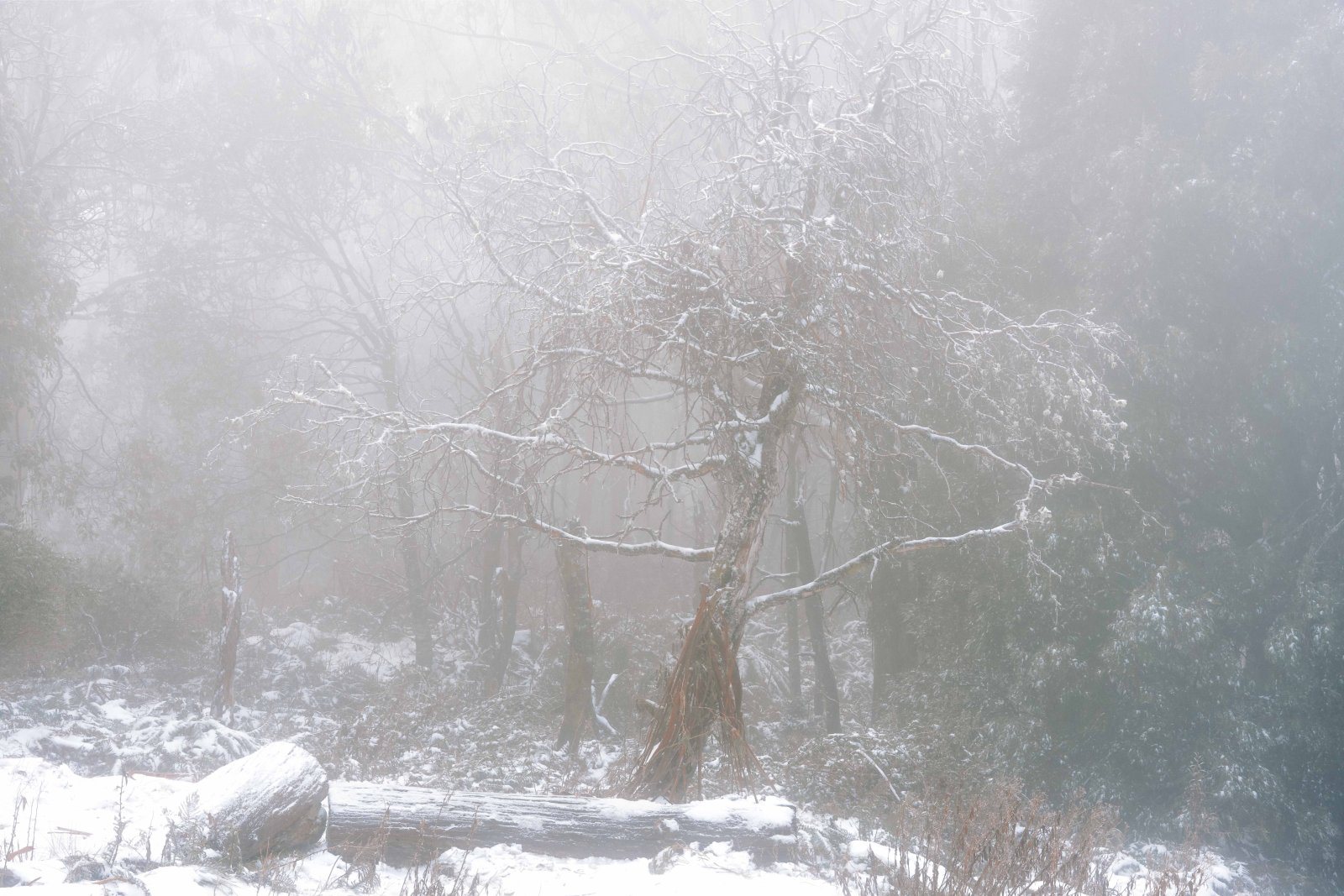
Spring also produces good fog conditions, especially in regions where cool mornings meet warming ground. Late winter can deliver fog when warm fronts move over snow or cold ground.
Best Time of Day
Pre-dawn through 1-2 hours after sunrise. Radiation fog peaks just before sunrise when temperatures are lowest. As the sun rises and heats the ground, the fog begins to lift and thin - this transition period, when sunlight filters through breaking mist, produces the most dramatic photography conditions.
Best Terrain
- River valleys and lakeshores - water provides moisture, valleys trap cool air
- Forest floors - trees slow wind and trap moisture at ground level
- Elevated viewpoints - looking down into a fog-filled valley is one of landscape photography's great compositions
- Coastal headlands - advection fog rolling in from the ocean
- Urban parks and waterfronts - surprisingly good for atmospheric fog photos at dawn
Camera Settings and Technique
Fog creates unique challenges for your camera. Here's how to handle them.
Exposure
Fog is bright and even-toned, which tricks your camera's meter into underexposing. The meter sees all that white/grey and tries to bring it to middle grey. Dial in +0.7 to +1.0 EV exposure compensation to keep the fog looking bright and luminous rather than muddy grey.
Check your histogram - you want the data pushed right (bright) without clipping highlights.
Aperture
f/8-f/11 for sharp landscape scenes with depth. If you're isolating a single subject emerging from the fog (a lone tree, a figure), open up to f/2.8-f/4 to separate it from the background.
White Balance
Fog naturally cools a scene. Set your white balance slightly warm - 5500-6500K - to counteract the blue/grey cast. Or keep it cool for a moodier feel. Shoot RAW and you can adjust later, but having an intention at capture helps your creative process.
Focus
Autofocus struggles in fog because there's so little contrast for the AF system to lock onto. Switch to manual focus or back-button AF. Focus on a subject with clear edges (a tree trunk, a fence post) and lock it. For distant landscapes in fog, manual focus set to the hyperfocal distance works well.
Lens Choice
Both ends of the zoom range work beautifully in fog:
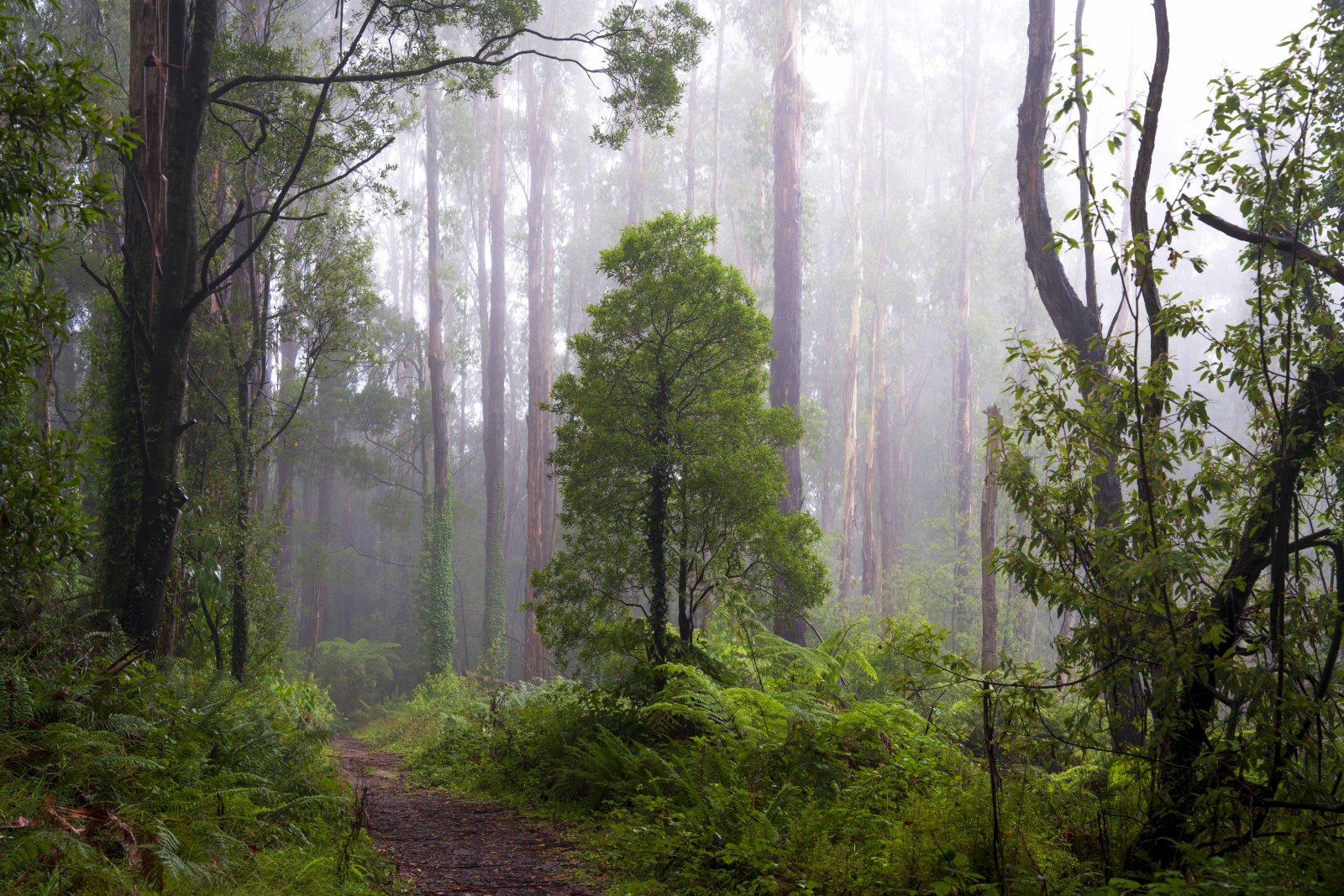
- Wide angle (16-35mm) - immersive, draws the viewer into the fog. Great for forest interiors and paths disappearing into mist.
- Telephoto (70-200mm+) - compresses the fog layers, making depth and separation between elements more dramatic. Trees receding into fog become silhouettes stacked in layers.
Protect Your Gear
Fog is moisture. Your front element will collect condensation. Bring a microfibre cloth and wipe the lens between shots. A lens hood helps reduce droplets. Keep your camera bag sealed when not shooting - electronics and persistent dampness don't mix.
Composition in Fog
Fog is one of the most forgiving conditions for composition because it does half the work for you.
Simplify
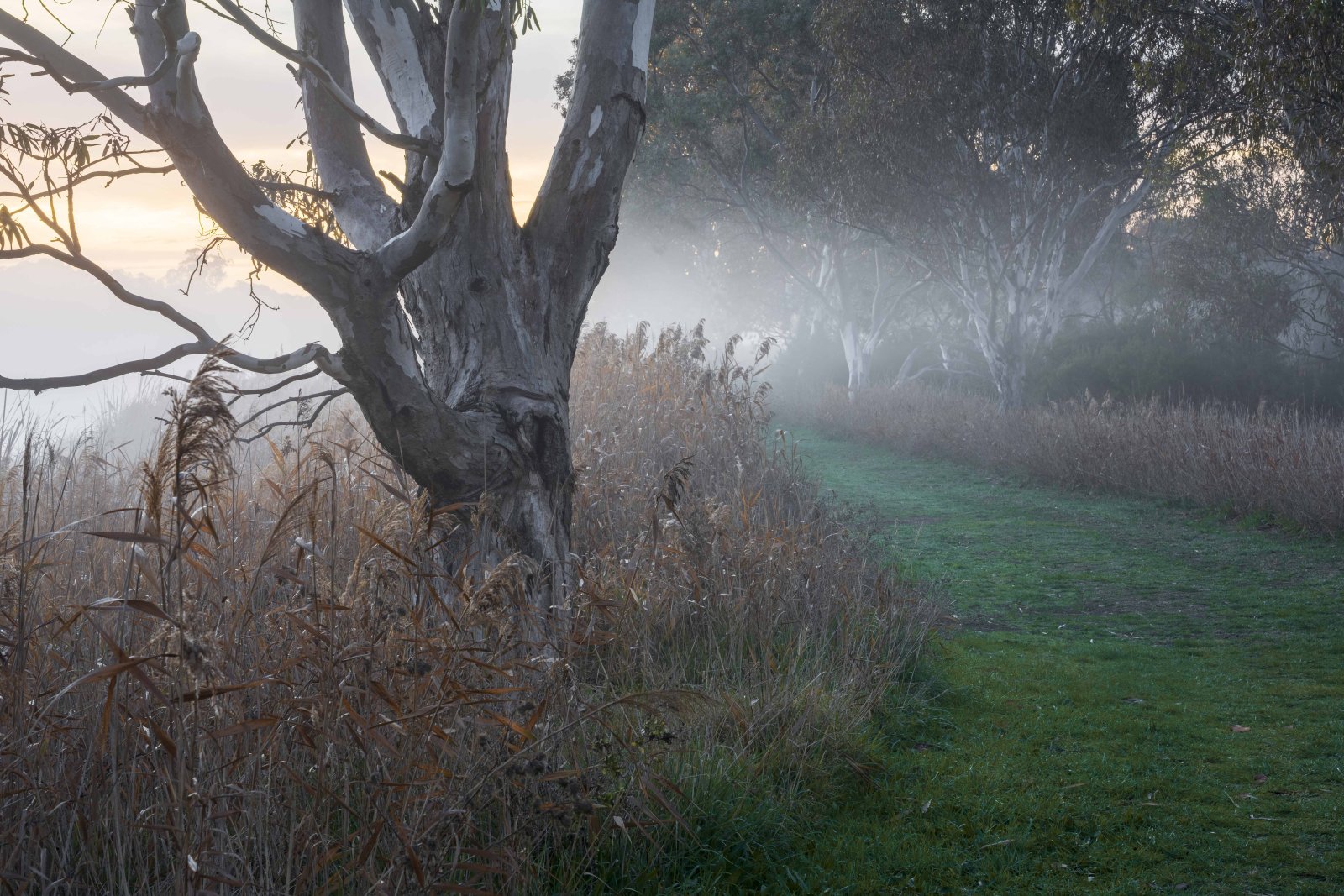
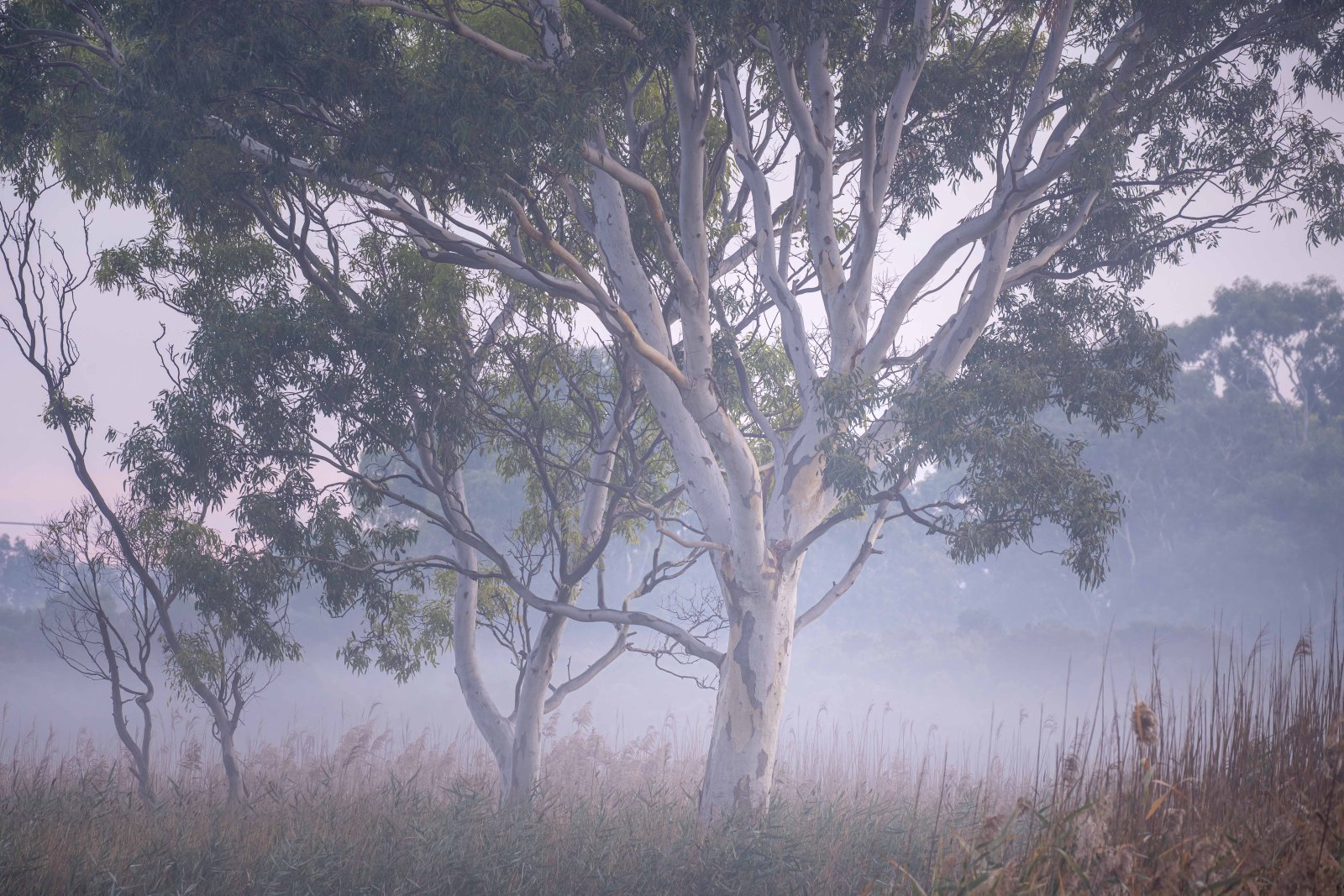
Fog removes visual clutter. Elements that would normally compete for attention in the background simply disappear. Use this to your advantage - place a single strong subject in the frame and let the fog handle the rest.
Depth Layers
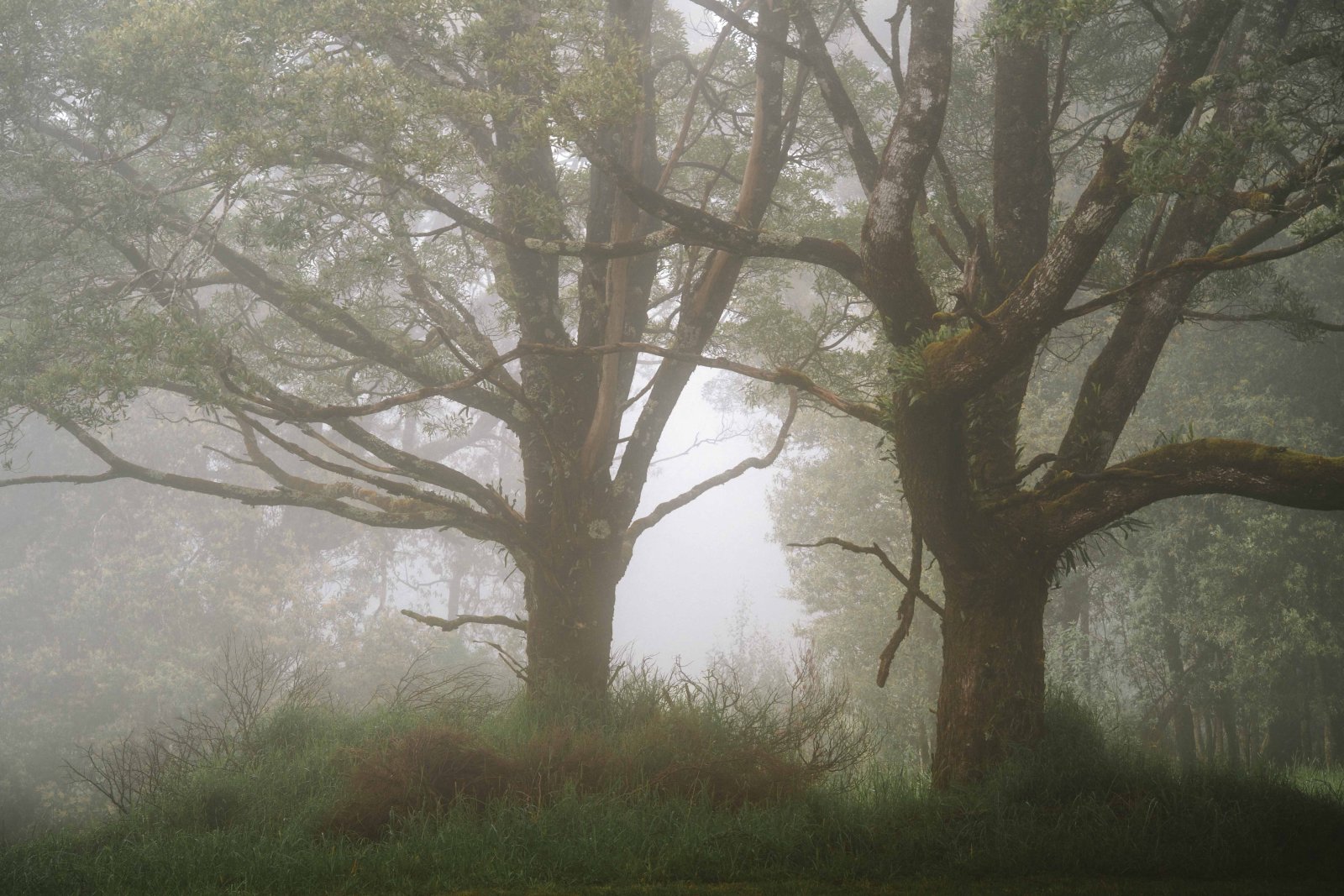
Fog creates natural atmospheric perspective. Objects closer to the camera appear darker and more saturated; objects further away fade into the mist. This creates a sense of depth that's immediately readable - use it by placing elements at different distances: a foreground tree, a midground fence, a background treeline fading into white.
Backlight and God Rays
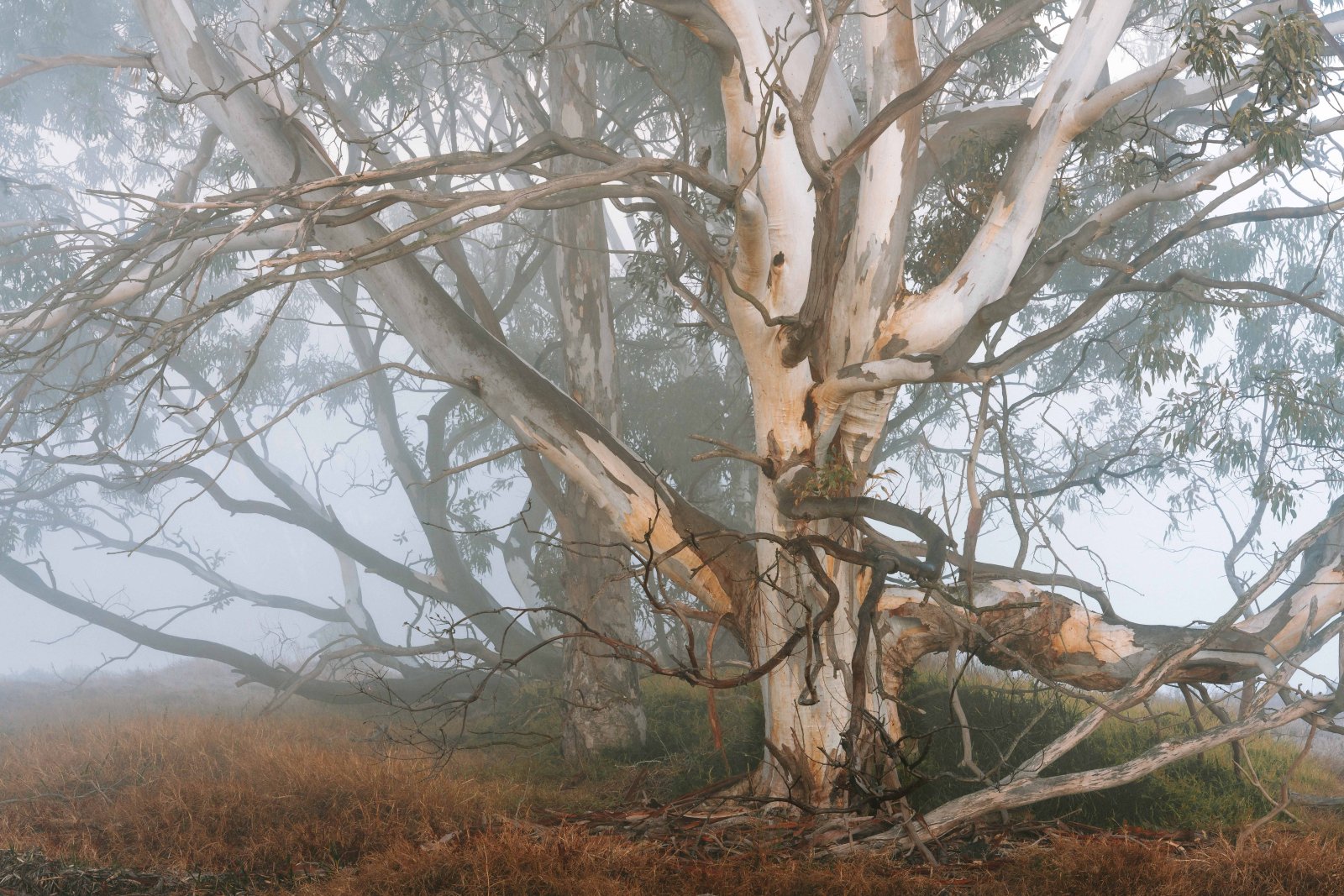
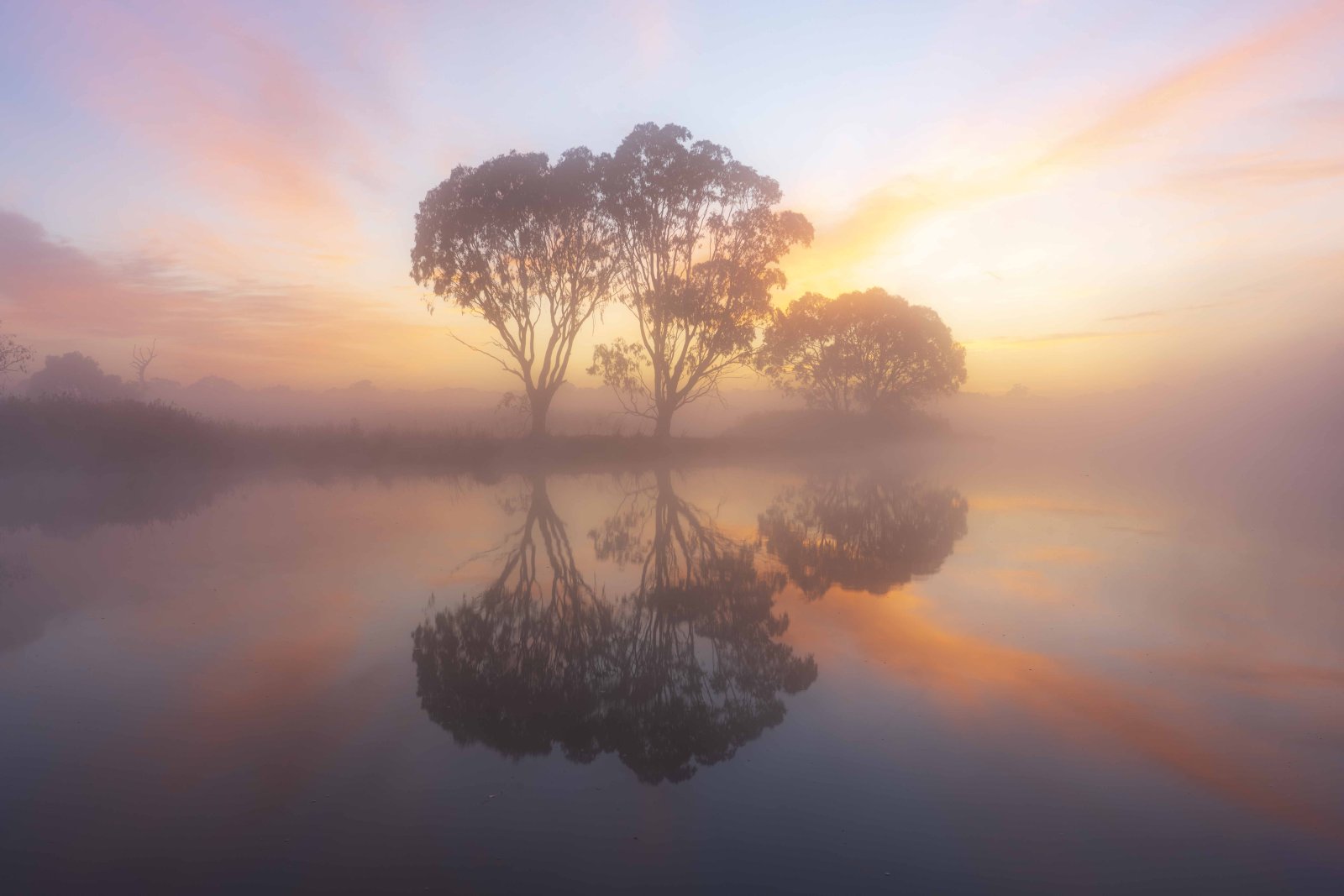
When the sun is low and behind the fog, light scatters through the moisture in visible beams - god rays. Position yourself so the sun filters through trees, buildings, or other gaps. This backlighting also creates dramatic silhouettes of subjects in the foreground.
Leading Lines
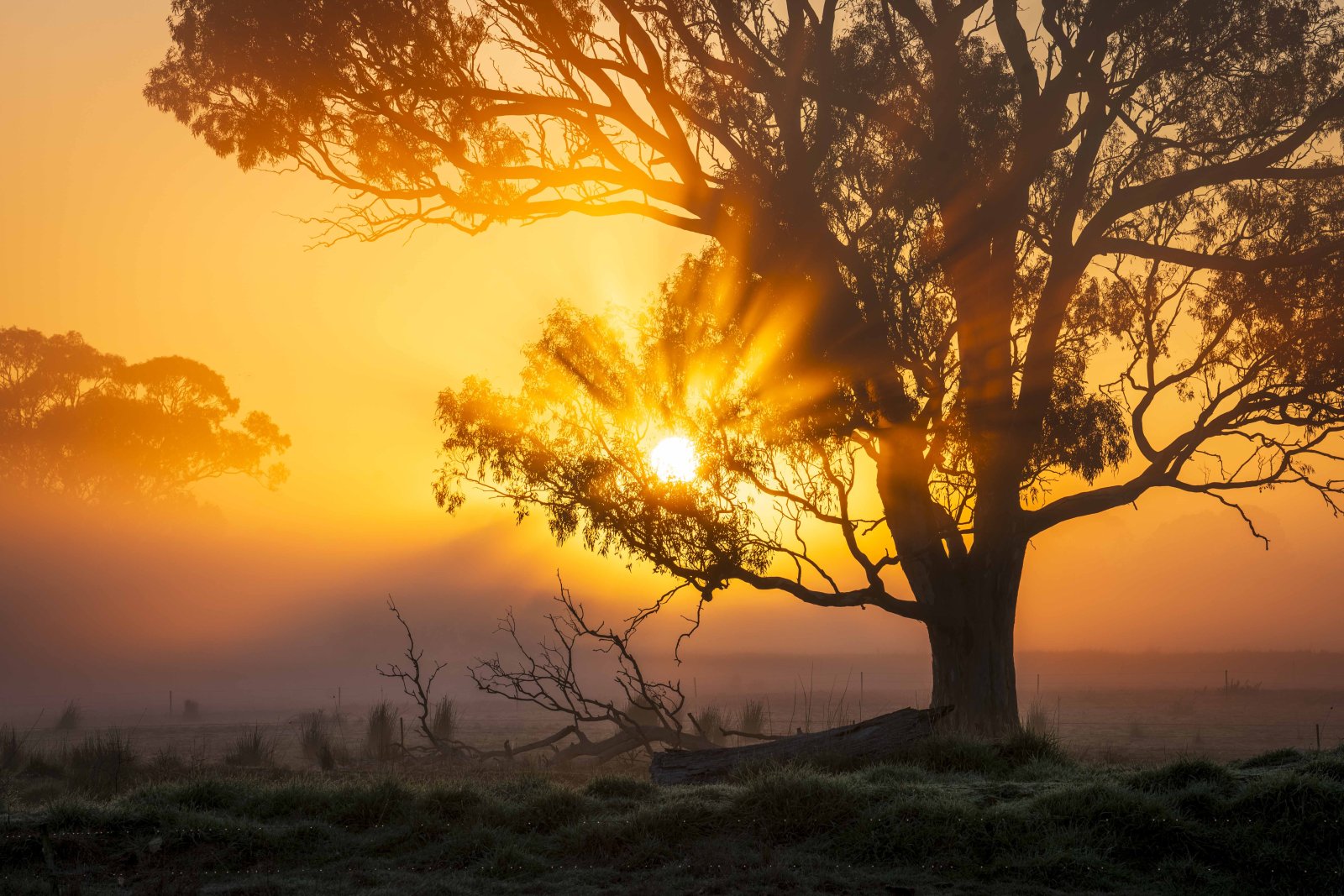
Paths, fences, rows of trees, and roads that disappear into fog create powerful leading lines. The viewer's eye follows the line into the unknown - it's one of the most effective compositions in fog photography.
Minimalism
Embrace the negative space. A lone tree in a field of white fog, a solitary figure on a misty bridge, a single boat on a still foggy lake. Fog gives you permission to leave most of the frame empty - and the result is often more powerful than a complex scene.
Planning Your Fog Shoot with ShutterTime
Manually checking dew point, wind speed, overnight cloud cover, and humidity across multiple locations every morning is tedious. ShutterTime automates this with its fog scoring system.
The Foggy Profile
ShutterTime includes a Foggy photography profile that evaluates conditions specifically for fog photography. The profile weighs these conditions:
- Fog - Must Have (1.00x): At least 2 hours of fog duration required after the phase starts. This is the non-negotiable - if fog isn't predicted, the score drops to zero.
- Low Cloud - Nice to Have (1.00x): Low cloud cover complements fog and adds to the atmospheric feel.
- Wind - Penalty (1.00x): Even light wind over 5 km/h can disperse fog. The profile penalises high wind and gusts.
- Rain - Penalty (1.00x): Active rain during the shoot is a penalty, though light drizzle in fog can work.
- Recent Rain - Nice to Have (1.00x): Rain in the hours before increases ground moisture, making fog more likely to form.
- Autumn - Nice to Have (1.00x): Seasonal bonus - autumn conditions favour fog formation.

Install the Profile
You can create your own fog profile from scratch, or install the pre-built one from the Community page:
- Go to Community (the grid icon in the navigation bar, or click "Community Profiles" from your Profiles page)
- Switch to the Profiles tab
- Find the Foggy profile and click it to see the full conditions breakdown
- Click Install - this creates an independent copy you can customise to your preferences

Once installed, ShutterTime will score all your saved locations against fog conditions, showing you when and where fog is most likely.
Reading the Score
When you open the Upcoming dashboard, each location shows a score for each time phase (dawn, morning, midday, etc.). For fog photography, focus on the Dawn & Pre-Sunrise and Morning phases - that's when fog peaks.
A score of 90+ (green badge) means multiple conditions are aligned: fog is predicted, wind is calm, and atmospheric factors are favourable. A score of 80-89 (teal) is still very good. Below 70, one or more critical factors are likely missing.
Create a Plan
When you spot a high-scoring fog window in the coming days, create a Plan with a reminder. ShutterTime will notify you before the session starts so you don't sleep through the 5am alarm. Plans also log the conditions at the time, so you can review what worked after the shoot.
Key Takeaways
- Fog rewards early risers and planners. The best conditions happen before and just after sunrise.
- Learn the science. Dew point, wind speed, overnight conditions, and terrain are your predictors. Radiation fog in valleys, advection fog on coasts.
- Expose bright. Add +0.7 to +1.0 EV to keep fog luminous. Use manual focus when AF struggles.
- Simplify your compositions. Fog does the decluttering for you - embrace minimalism, depth layers, and leading lines.
- Use ShutterTime's fog scoring. Install the Foggy profile, watch for high-scoring dawn and morning phases, and set plan reminders. Let the scoring engine monitor conditions so you can focus on the creative side.
- Don't over-process. The softness and mood are the point. Light adjustments only.
Fog photography is one of the most rewarding genres in landscape photography - and one of the most accessible. You don't need exotic locations or expensive gear. You need patience, an early alarm, and a tool that tells you when conditions are right.
Happy fog hunting.
Ilia Mogilevsky