Why I Am Not Buying a Fujifilm GFX100S III or Sony A7R V
Tips-tricks Beginner
The Question I Always Get Wrong Every time I share a landscape photo, the first question is the same: "What camera do you shoot with?" Not "What time...
11 min read
Published May 26, 2026
The importance of time
The Question I Always Get Wrong
Every time I share a landscape photo, the first question is the same: "What camera do you shoot with?"
Not "What time did you wake up?" Not "How did you know the fog would be there?" Not "How long did you wait for that sky?" Always the gear.
Until a few months ago, I shot with a Sony A7R II. It came out in 2015, and I bought it 8 years later - second hand, well used - and shot with it until the shutter finally gave out. Now I shoot with a Sony A7R III - also bought second hand - and I will keep it until it dies too. My go-to lens was a Tamron 28-200mm f/2.8-5.6 - a budget all-in-one zoom that no serious landscape photographer would list as their dream glass.
And yet, I consistently come home with photos that make people ask what camera I use - because surely, it must be the gear.
It's not. It never was. The single biggest variable in landscape photography isn't your sensor, your lens, or your megapixel count. It's the conditions you shoot in. This article is about why timing will always beat gear, and how to shift your approach so the camera you already own starts producing its best work.
The Evidence: Same Place, Different Conditions
Go to any location twice. Once at noon on a clear day. Once at sunrise when fog is rolling through the valley and clouds are catching the first light.
The difference is staggering - and it has nothing to do with your camera. The light changed. The atmosphere changed. The sky changed. Your camera was exactly the same both times.
This is the fundamental truth of landscape photography: conditions create the image. Your camera just records it. A $5,000 body at noon will produce a worse photo than a phone at golden hour. Every time.
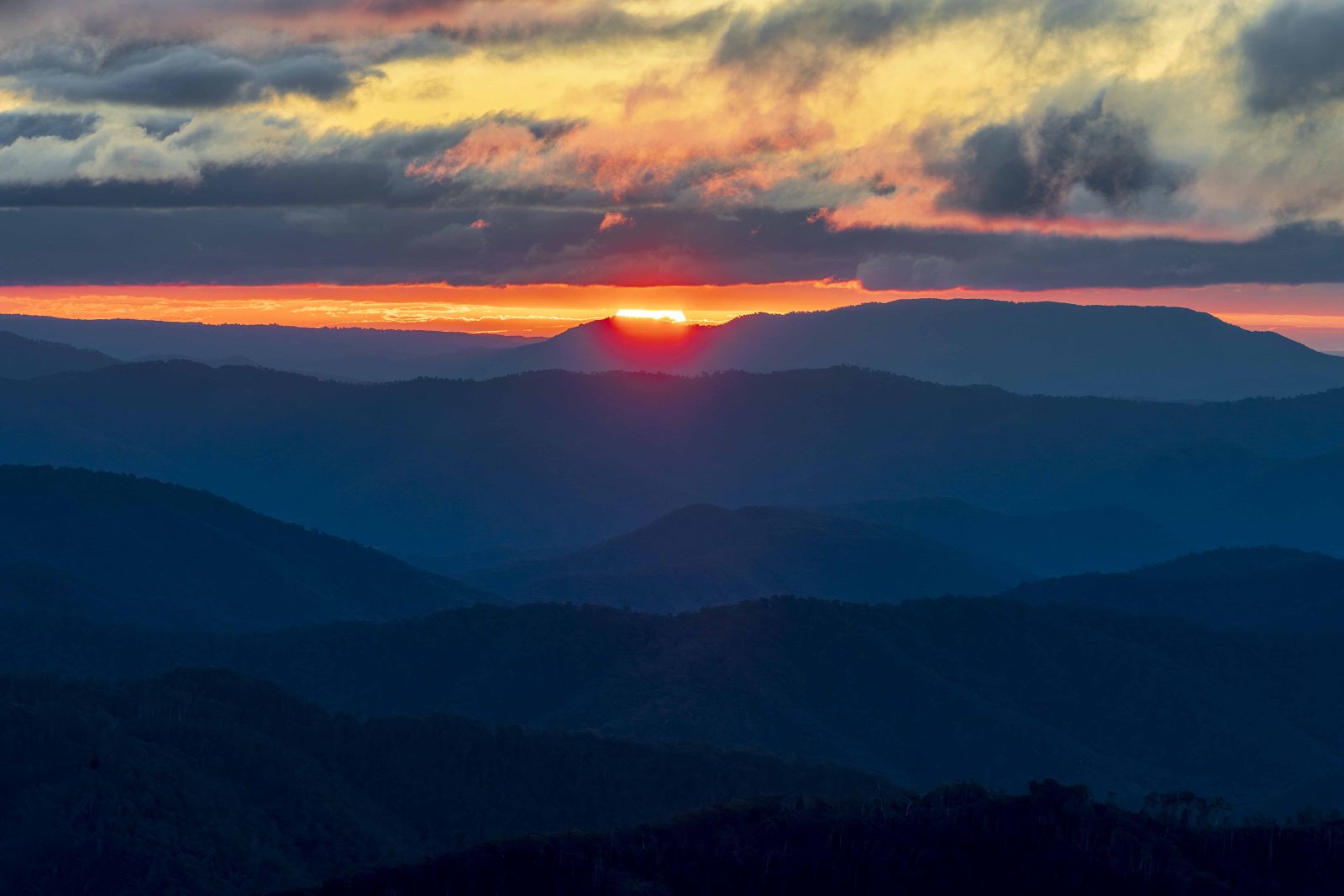
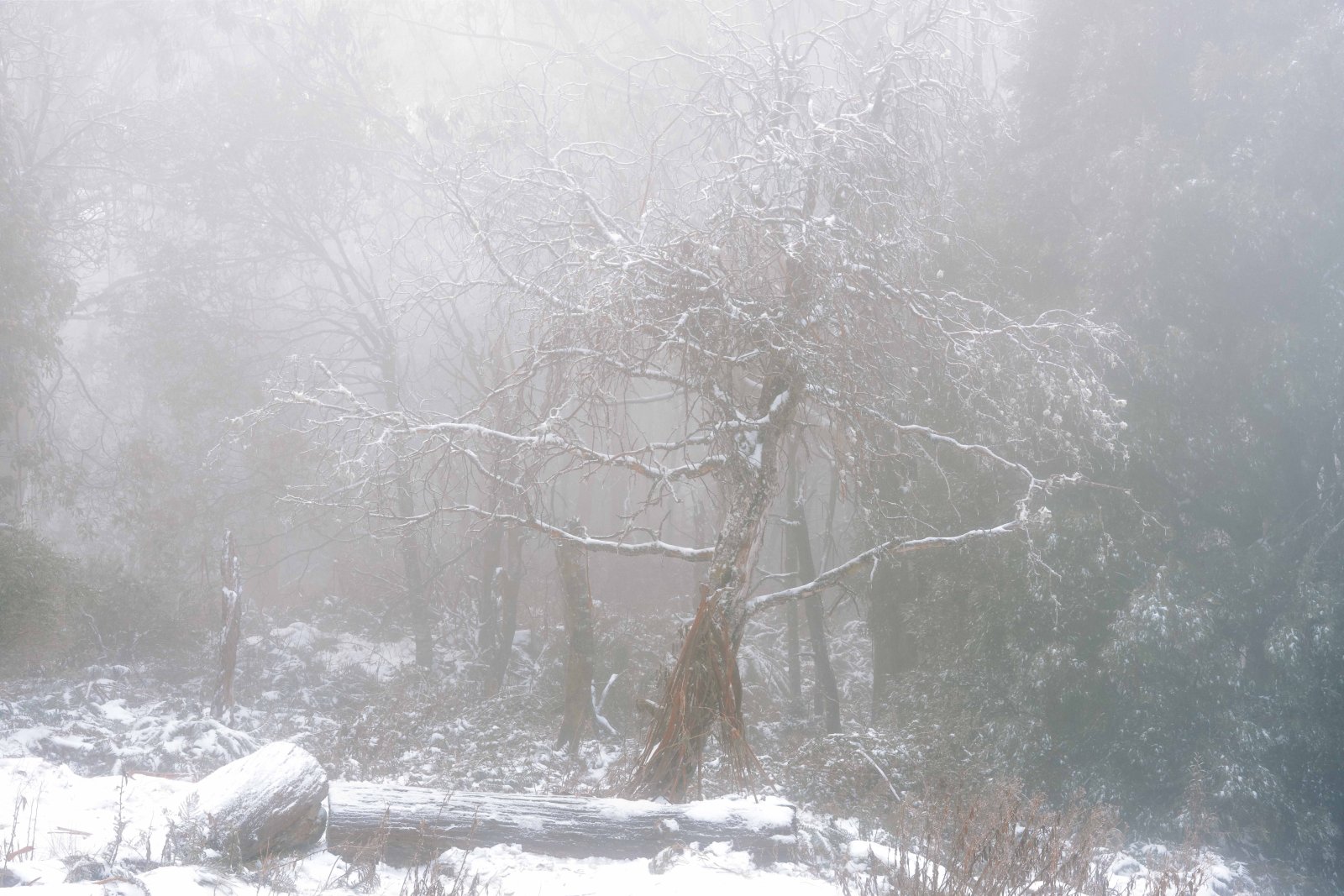
I've seen this play out at every location I've photographed. The same eucalyptus forest that looks flat and unremarkable at midday becomes otherworldly when morning fog fills the gaps between the trees and the first sun rays slice through the mist. Same trees. Same lens. Completely different photo.
The Five Conditions That Transform a Photo
If gear isn't the variable, what is? These five environmental factors determine whether you come home with something extraordinary or something forgettable.
1. Light Direction and Quality
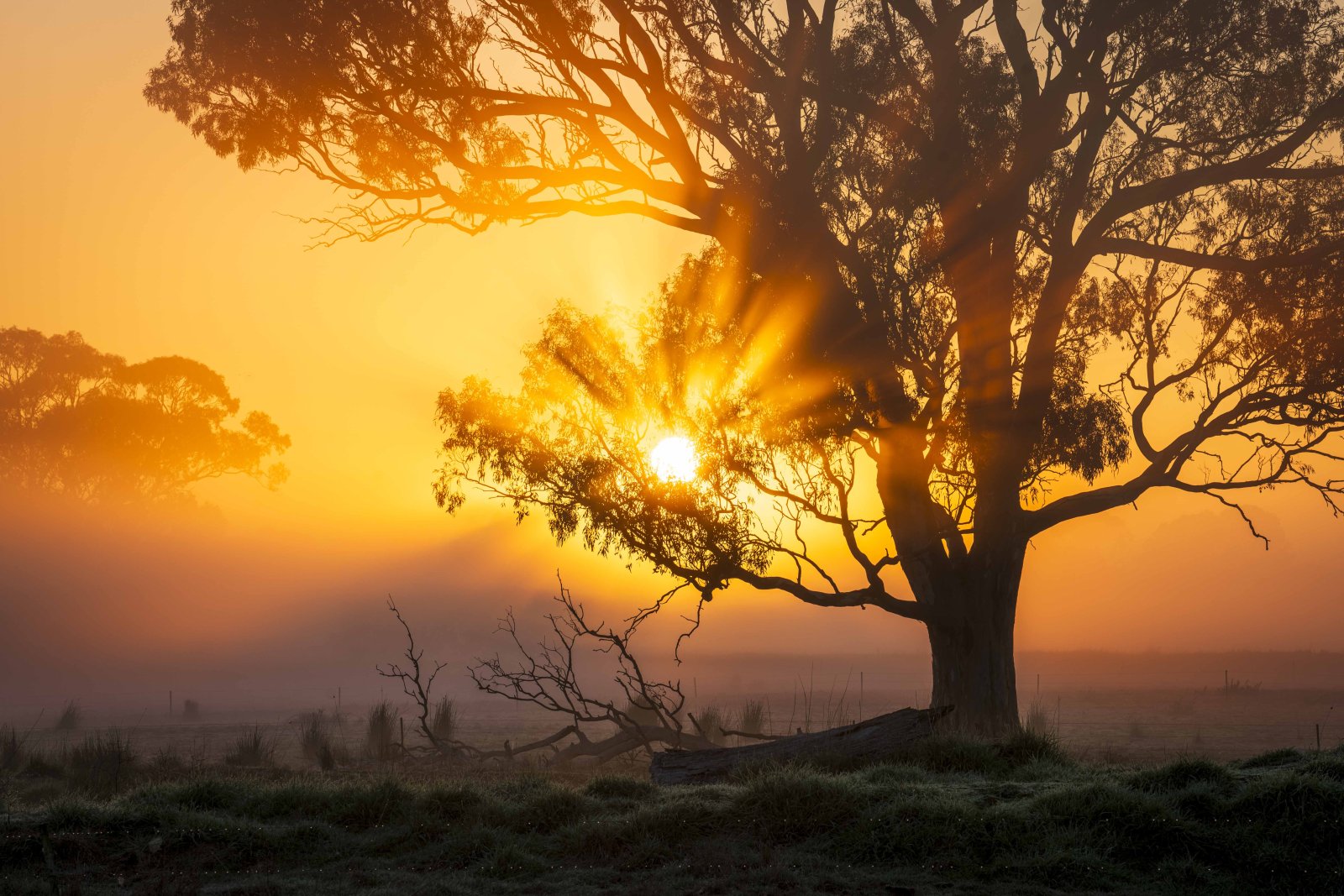
Golden hour (the hour after sunrise or before sunset) produces warm, directional light that adds depth, texture, and colour to everything it touches. Blue hour (the 20-30 minutes before sunrise or after sunset) gives you cool, even light with deep saturated skies. Overcast days create soft, diffused light that saturates colours and eliminates harsh shadows.
Midday sun? Flat, harsh, unflattering. No amount of lens sharpness fixes bad light.
2. Sky and Clouds
A dramatic sky can carry an average foreground. Scattered clouds at sunset light up in oranges and pinks. Storm clouds add tension and scale. A clear blue sky, on the other hand, gives you almost nothing to work with in the top half of your frame. The sky is the single most visible element in most landscape photos, and you have zero control over it - except when you choose to show up.
3. Atmospheric Conditions
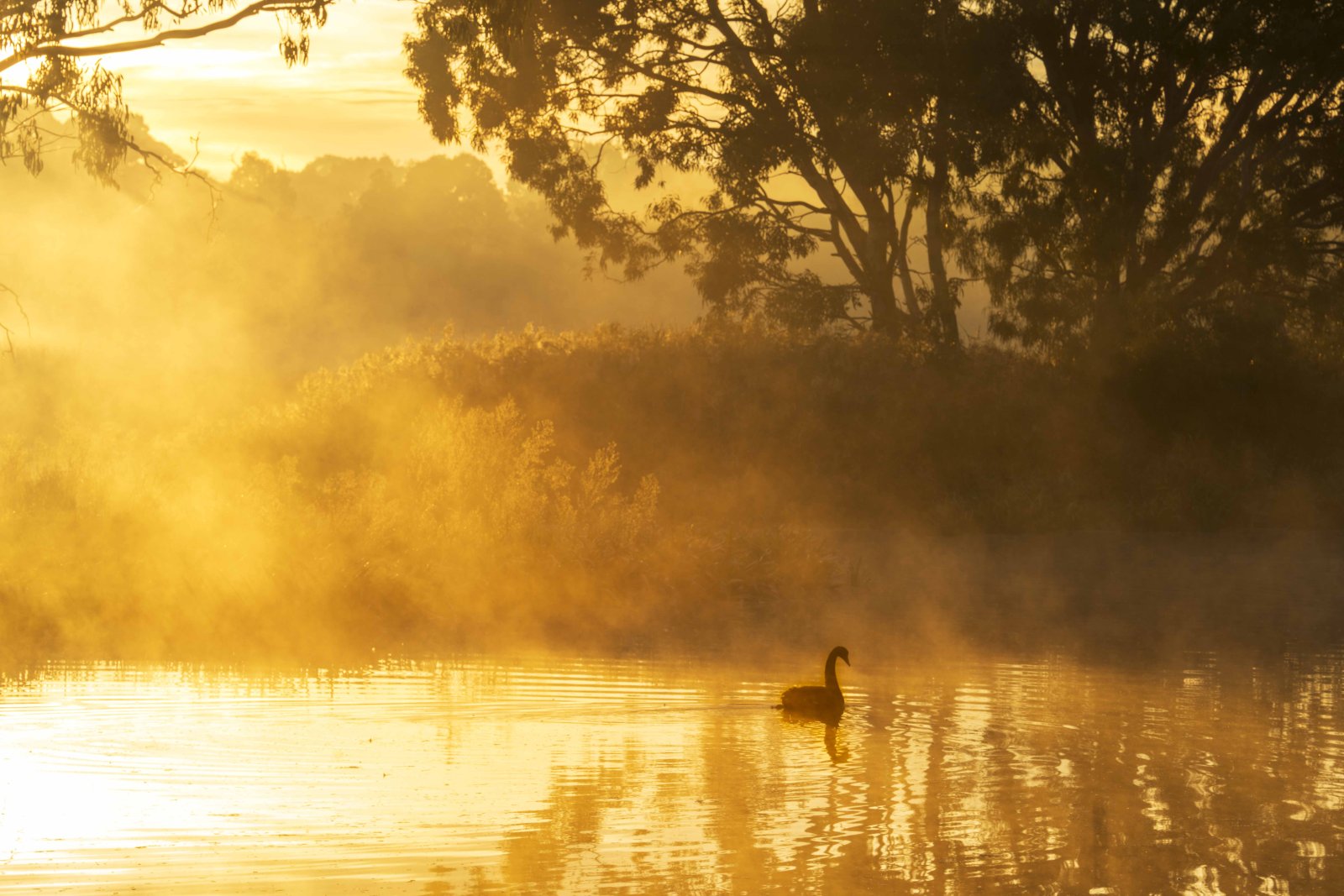
Fog, mist, haze, and rain are not obstacles. They are gifts. Fog adds depth by creating natural atmospheric perspective. Rain saturates colours and adds reflections. Mist simplifies compositions by removing background clutter. Haze softens distant elements and separates foreground from background. The photographers who get the best atmospheric shots are the ones who go out when the weather looks "bad."
4. Water State
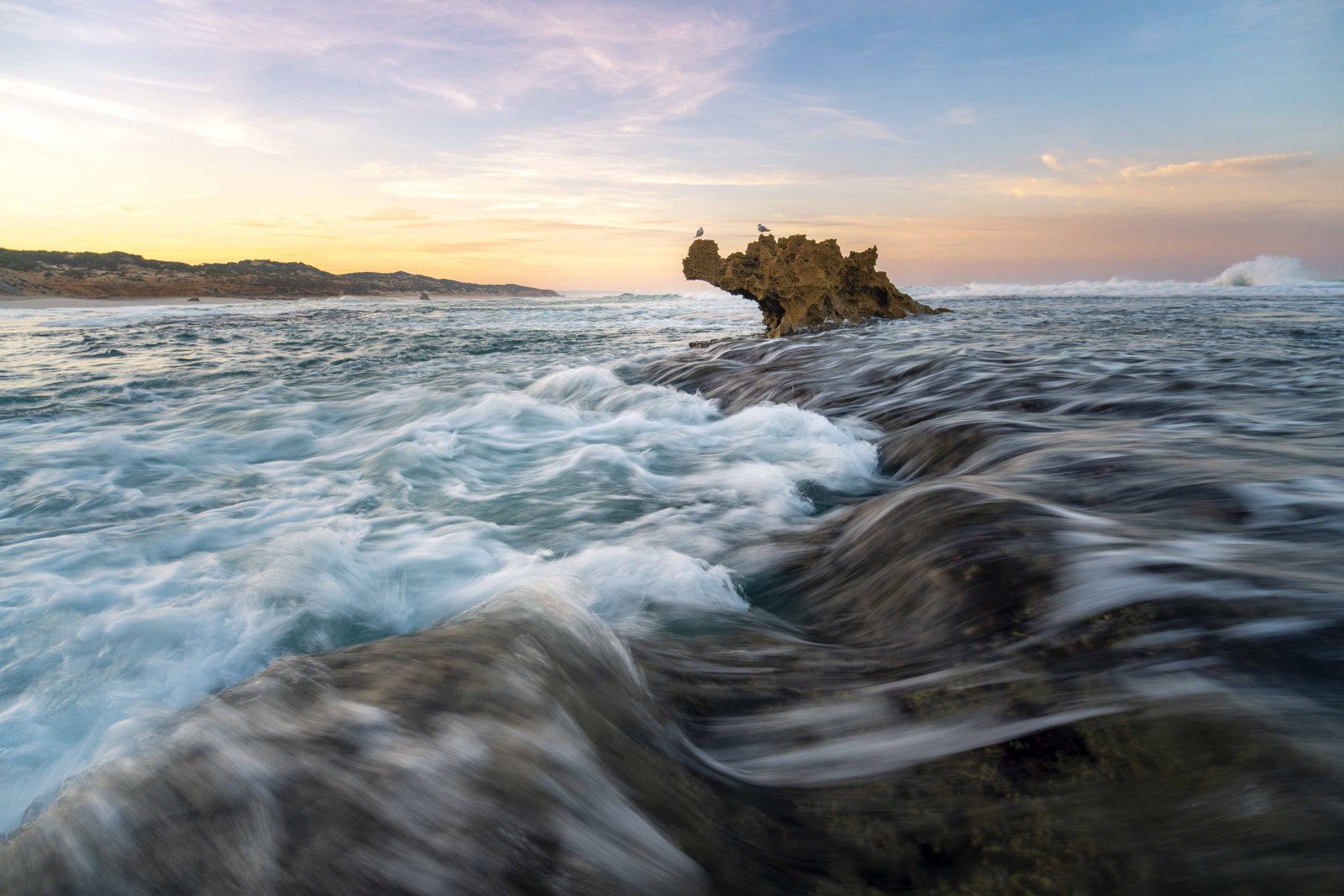
For coastal and waterfall photography, the state of the water matters enormously. Low tide exposes rock pools, textures, and leading lines. High tide brings waves crashing against cliffs. A calm morning gives you mirror reflections. A waterfall after heavy rain is three times the volume and drama of the same waterfall in a dry spell. Tide timing, swell direction, and recent rainfall are all conditions - not gear.
5. Celestial Events
The Milky Way core is only visible during certain months and only when the moon isn't drowning it out. Aurora activity depends on solar wind and geomagnetic conditions. Moonrise and moonset can be compositional elements when they align with your foreground. These events are entirely about timing - knowing when they happen and being there.
Why We Obsess Over Gear Instead
If conditions matter so much more than equipment, why does every photography forum, YouTube channel, and Instagram post lead with gear?
Because gear is controllable. You can buy a new lens right now. You can read reviews, compare specs, watch unboxing videos. It feels productive. You feel like you're improving your photography by upgrading your kit.
Conditions, by contrast, are uncontrollable and unpredictable. You can't buy good light. You can't order fog on Amazon. You can't schedule the Milky Way to appear on your day off. So we focus on the thing we can control - the camera - and ignore the thing that actually matters - the environment.
Camera manufacturers spend billions on marketing. They need you to believe that the next sensor, the next autofocus system, the next stabilisation upgrade will transform your photography. It won't. Your photos from a new $5,000 body will look almost identical to your photos from the body you already own - because the conditions were the same.
Social media makes it worse. Photographers post their gear lists, not their alarm times. They share their lens collections, not the three failed sunrise attempts before the one that worked. The 4am alarm, the drive in the dark, the waiting in the cold - that's the real cost of great landscape photography. It's just not as photogenic as a flatlay of camera bodies.
My Gear: Proof That It Doesn't Matter
Let me be specific about what I shoot with, because I think it makes the point better than any theory.
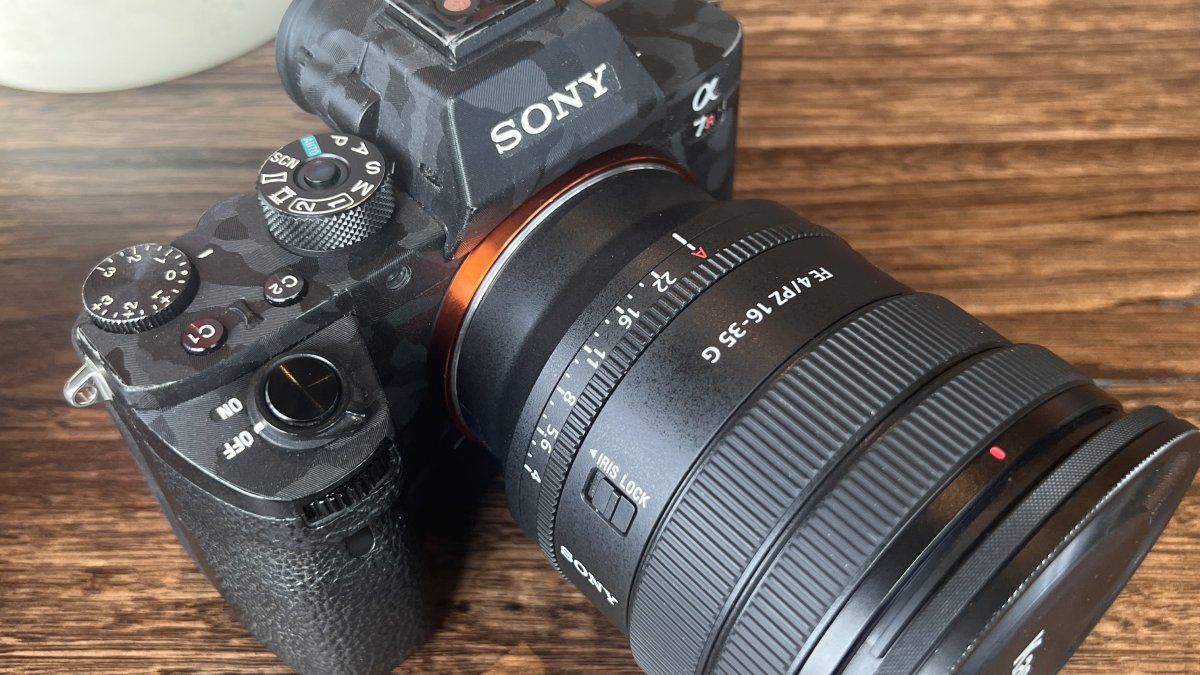
Camera: Sony A7R II (2015). I shot with it for years until the shutter mechanism died a few months ago. The autofocus was slow by modern standards. The screen was mediocre. The battery life was poor. It cost me a fraction of what a current-generation body would cost. And it produced every photo you see in this article.
Lens: Tamron 28-200mm f/2.8-5.6. An all-in-one superzoom. Not a dedicated wide-angle. Not a fast prime. Not a $2,000 professional zoom. The internet will tell you it's "good for the range" - which is code for "not as sharp as a prime." I don't care. It's on my camera every single day.
Lens: Sony 16-35mm f/4 PZ. For wider shots. Not the fast f/2.8 GM that everyone lusts after. The compact power-zoom version that barely gets mentioned in reviews.
Lens: Viltrox 14mm f/4 Air. For astrophotography. A tiny, affordable ultra-wide that costs a fraction of the Sony or Sigma alternatives. Sharp enough for stars, small enough to forget it's in the bag.
That's it. No focus rail. No tilt-shift. No medium format.
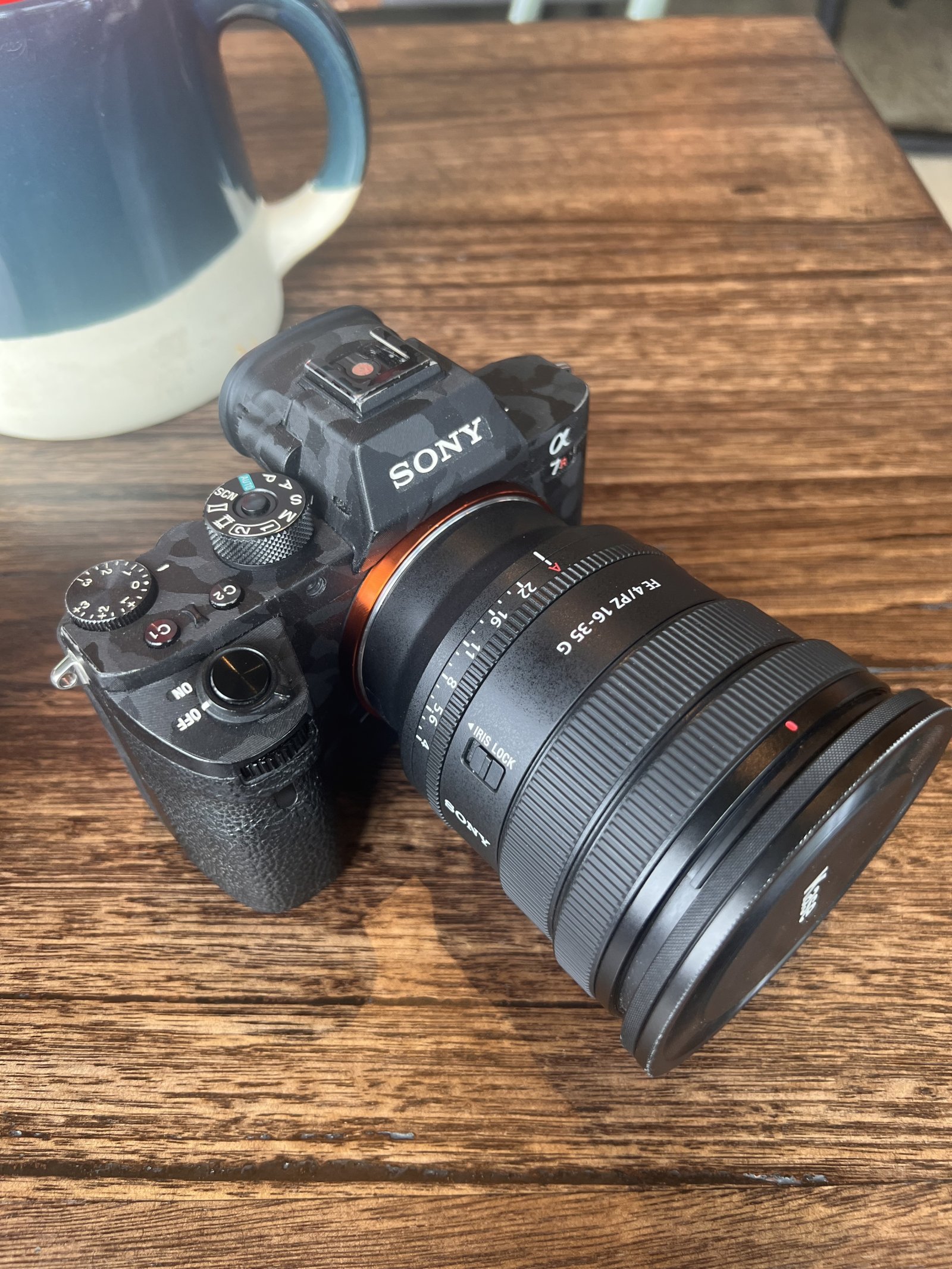
Every photo in this tutorial was shot with this setup. The sunrises. The fog. The reflections. All of it. A camera from last decade and budget zoom lenses.
The question was never "what do I shoot with?" The question was always "when do I shoot?" And the answer is: when conditions align.
The Conditions-First Workflow
Here's the approach that changed my photography completely. It's not about finding good locations (though that helps). It's about knowing when your locations will look their best.
Step 1: Build a Location List
Save every location you find interesting. Parks near your house, coastal spots within driving distance, elevated lookouts, rivers, forests. You don't need exotic destinations. You need familiar places that you can reach quickly when conditions are right.
Step 2: Understand What Each Location Needs
Every location has conditions that make it shine. A valley needs fog. A coast needs low tide and dramatic clouds. A lookout needs clear air and sunset colour. A forest needs soft overcast light or morning mist. Learn what your locations need, not just where they are.
Step 3: Monitor Conditions
This is where most photographers fall short. They check the weather app for "sunny" or "cloudy" and make a go/no-go decision based on that. That's not enough. You need to track fog probability, tide times, moon phase, wind speed, cloud cover percentage, and how all of these combine at the specific time you'd be shooting.
This is exactly why I built ShutterTime. It scores every location across all of these conditions for every time window - dawn, golden hour, midday, sunset, and night. Instead of checking five different apps and trying to correlate them in my head, I look at a single score. A high score means conditions are aligning. Time to set the alarm.
Step 4: Go Shoot With Whatever Gear You Have
When the score is high, grab your camera - whatever camera that is - and go. Don't wait until you've upgraded your body. Don't wait until you've bought that wide-angle prime. Don't wait until you can afford a better tripod. Go now, with what you have. The conditions won't wait for your gear wishlist.
What Gear Actually Matters
I'm not saying all gear is irrelevant. Some things genuinely help with conditions-based shooting:
A tripod: Essential for low-light shooting (golden hour, blue hour, night). Doesn't need to be expensive. Needs to be stable and something you'll actually carry.
A polarising filter: Cuts glare on water and wet surfaces, deepens skies. Useful in rain and overcast conditions where you're shooting saturated foliage.
An ND filter: Lets you slow your shutter speed for smooth water even in bright conditions. One 6-stop ND covers most situations.
Weather sealing (or a rain cover): The best conditions often come with bad weather. If you can't take your camera out in light rain, you're missing the best light.
Notice what's not on this list: a faster lens, more megapixels, better autofocus, a full-frame upgrade, or a second body. Those are nice to have. None of them will change the light.
Keep Your Kit Organised
While gear is not the main event, forgetting a crucial piece on a pre-dawn shoot is a real problem. There is nothing worse than arriving at a location in perfect conditions and realising your ND filter is on your desk, your spare battery is still on the charger, or your tripod plate is in your other bag.
ShutterTime includes a gear management system that lets you build kits for different types of shoots - a landscape kit, an astro kit, a coastal kit. When you create a plan for a session, your kit checklist is right there. A quick glance before you leave the house means you never arrive at a stunning fog-filled valley only to discover you left the tripod at home.
It is a small feature, but it removes one of the few gear-related problems that actually costs you photos.
Building a Conditions Practice
The hardest shift isn't technical - it's mental. It's moving from "I have free time, let me go shoot" to "conditions are aligning, I need to make time."
That means:
Setting alarms for sunrise even when you'd rather sleep. The best light happens when most people are in bed.
Going out in bad weather - on purpose. Rain, fog, wind, cold. That's where the interesting photos live.
Accepting failed trips. Sometimes the fog doesn't form. Sometimes the clouds don't catch the light. Sometimes you drive an hour and come home with nothing. That's the game.
Revisiting the same location repeatedly. Familiarity with a place means you can react faster when conditions change. Your 20th visit in perfect conditions will beat your first visit in average conditions.
Reviewing your best photos - not for composition tips, but for conditions. What time was it? What was the weather? What was the tide doing? What phase was the moon? You'll find a pattern: your best work correlates with conditions, not gear.
ShutterTime's scoring system is built around this idea. Set up your locations, choose profiles that match your photography style, and let the scoring engine monitor conditions. When a score spikes, that's your signal to go. You focus on the creative side - composition, timing, being present. The planning is handled.
Key Takeaways
Conditions create the photo, your camera records it. Light quality, sky, atmosphere, water state, and celestial events are the five variables that matter most.
Gear is a distraction. Every photo in this article was shot on near decade-old cameras and budget lenses.
The real investment is time and attention. Waking before dawn, going out in bad weather, learning what your locations need, and being patient enough to wait for conditions.
Monitor conditions, not gear reviews. ShutterTime scores your locations across weather, tides, astronomy, and light so you know when to go - not what to buy.
Stop asking "what do I shoot with?" Start asking "when do I shoot?" That question changes everything.
The next time someone asks what camera you use, smile and tell them. Then ask them if they've ever photographed sunrise in fog. Watch their face change. That's the real answer.
Happy shooting.
Ilia Mogilevsky